Choosing Clinical Laboratory Equipment: Three Scenarios, Three Strategies
A quality manager's practical guide to selecting medical sterilizers, imaging systems, and surgical delivery systems across different practice scenarios.
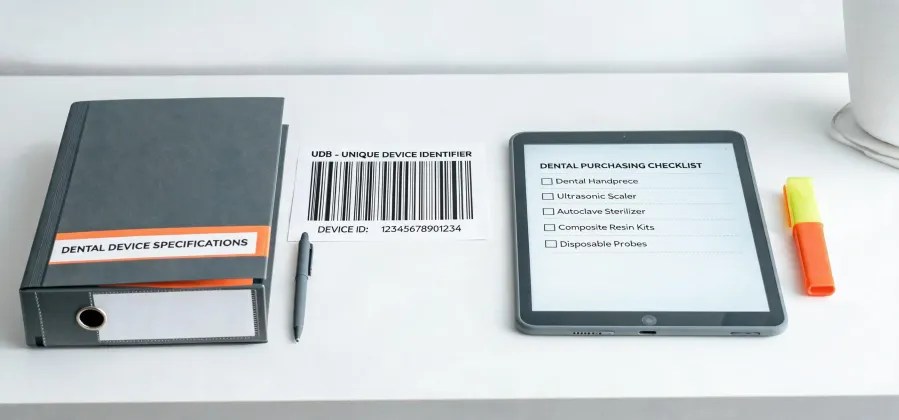
I review medical and dental equipment specifications for a living. Roughly 200 unique items cross my desk each year—sterilizers, imaging systems, surgical delivery devices, diagnostic monitors. Actually, closer to 180 if I don't count consumables. The question I get most often from clinical teams isn't "which product is best?" It's "what should we buy?"
Here's the uncomfortable truth: the right answer depends on your situation. A single-location clinical laboratory with six employees needs different equipment than a regional hospital network. A two-chair dental practice has different priorities than a surgical center doing 40 cataract procedures a week. Pretending there's a universal recommendation does everyone a disservice.
So instead, let me walk through three common scenarios. Each has a different risk profile, a different budget reality, and a different definition of "good value."
Start by Classifying Your Situation
Before comparing product brochures, put yourself in one of three buckets. The criteria aren't just about revenue—they're about operational complexity and who actually makes purchasing decisions.
- Scenario A: Single-location practice or independent lab. Under 10 staff. One person (often the owner) makes the purchasing call.
- Scenario B: Multi-location clinic group or regional laboratory network. 10–100 staff. Some purchasing is centralized, but individual sites still make autonomous buys.
- Scenario C: Hospital system or large surgical center. 100+ staff. Formal procurement department with vendor contracts, SLAs, and clinical engineering involvement.
These boundaries are approximate. If you're not sure where you fall, the last section has a two-minute self-diagnostic that should help.
Scenario A: Single-Location Practice or Independent Lab
Your biggest risk isn't buying the wrong brand—it's overbuying. I see this pattern constantly: a small dental clinic specs a hospital-grade medical sterilizer because the sales rep calls it "future-proof," or an independent imaging center purchases a full-size C-arm when their case mix is 80% extremities. Every equipment decision carries hidden carrying costs: floor space, staff training, maintenance contracts, and clinical time lost while your team learns new workflows.
Take sterilizers. A small practice processing 10–15 instrument cassettes per day doesn't need a 200-liter chamber designed for hospital central sterile processing. A bench-top autoclave in the 17–23 liter range typically costs $4,000–$12,000, based on quotes I reviewed for a clinic client in early 2024—late 2023 actually; verify current pricing. The larger unit costs roughly twice as much, consumes more energy, and doesn't shorten cycle times if you're running batch loads anyway. You'd be paying for capacity you're unlikely to use for years.
The same logic applies to imaging. A question I hear often from clinic owners: how does a C-arm work? Briefly: it's a mobile fluoroscopy unit shaped like the letter C. The X-ray source sits on one end and the image detector on the other, which lets the beam be positioned at nearly any angle without physically moving the patient. Extremely useful for orthopedic procedures and pain management.
But a C-arm isn't the right answer for every imaging need. If your practice focuses on dental implants and routine oral surgery, a dental CBCT gives you the 3D bone assessment you need at lower radiation output and a fraction of the footprint. Knowing what you don't need is just as important as knowing what you do.
Ophthalmic practices face a similar decision. Look at surgical delivery system features rather than just brand reputation. The Envista Envy surgical delivery system, for example, includes a footpedal-activated handpiece and controlled delivery mechanism designed to reduce intraocular pressure fluctuations during IOL insertion. That matters if you do high-volume cataract work. If you're doing a few procedures per month, the learning curve might not be justified.
Scenario B: Multi-Location Clinic Group or Regional Lab Network
If you're here, your challenge flips: instead of overbuying, you're likely under-standardizing. I've walked through clinic groups where Site 1 runs a different intraoral scanner than Site 2, where sterilizers come from three manufacturers, where each location maintains its own vendor relationships. Individually, every site made reasonable choices. In aggregate, it's a mess.
The supply disruption in early 2022 changed how I think about this. One backorder on sterilization pouches forced us to scramble across three distributors, and suddenly "single source" didn't sound like efficiency anymore. When procurement specialists mention "envista supply chain" in this context, they usually mean something specific: consistent, traceable product availability across all sites. That consistency matters more at scale than any individual equipment feature.
A concrete example. In 2023, I reviewed a six-clinic group with decentralized purchasing. Every site bought sterilizer maintenance kits independently. The same part number cost $48 at one location and $73 at another. Nobody was negligent—there just wasn't an owner for category-level purchasing. That $25 per-kit delta added up to about $3,800 in annual overspend.
Compare that with a standardized group: same sterilizer model everywhere, one preferred distributor, and a simple ordering threshold. Their per-site service costs ran 22% lower, and they had zero missed sterilization cycles in a 12-month audit window.
The fix isn't glamorous. Standardize equipment models across sites. Assign one individual to own vendor relationships, even if it's part of a clinical director's existing duties. Build a consumables baseline so location managers know what to order and when.
When I compare standardized groups against non-standardized ones—similar size, similar patient volume—the standardized group consistently reports fewer training errors, faster onboarding for locum staff, and lower service costs. I used to think that was just process discipline. After watching the data for a full year, I'm convinced standardization itself is a quality intervention.
Scenario C: Hospital System or Large Surgical Center
If you're reading this from procurement or clinical engineering, you already have formal processes, vendor scorecards, and business reviews. What I'd add is a caution that sounds elementary but gets violated all the time: price-per-unit is not total cost.
I've reviewed dozens of requisitions where the lowest-quoted option won the bid, then produced higher downstream costs in service calls, installation overruns, and first-year failure rates. In my experience, roughly 60% of lowest-quote selections ended up costing more within 18 months. Not because the product was defective—because the quote didn't account for downtime, technician response times, or compatibility workarounds.
Three factors deserve more weight than they typically get:
- Integration. Does the device connect cleanly to your EHR or imaging network? A delivery system that requires manual documentation creates hidden nursing labor that never appears on the invoice.
- Service response SLA. When a C-arm goes down, every scheduled procedure in that room is affected. The gap between a 4-hour and 48-hour response SLA matters more than most spec-sheet differences.
- Lifecycle policy. What happens when the vendor ends support? For diagnostic imaging, discontinued firmware updates can turn functioning systems into expensive paperweights.
Honestly, I'm not sure why some vendors consistently hit their service response targets while others miss by days. My best guess is internal resource allocation, but I don't have visibility into their operations. What I do know: the SLA is only as useful as the vendor's track record of honoring it. Ask for reference accounts before you sign.
Consolidation with a supplier—whether that means standardizing on Envista equipment across a region or narrowing to one sterilization brand—can unlock real leverage. But consolidation isn't cost-cutting. Aim for transparent pricing, documented SLAs, and enough vendor margin for them to serve you well.
Which Scenario Are You Actually In?
Four questions, two minutes. That's all it takes to figure out where you stand.
- How many physical locations do you operate? One site means Scenario A. Two or more pushes you to Scenario B at minimum, even if purchasing still feels informal.
- Is there someone whose responsibilities explicitly include procurement? If nobody owns equipment buying, you're in Scenario A. If someone does, even part-time, you're likely in B or C.
- What's your annual capital and consumables spend? Below roughly $50,000: A. Between $50,000 and $500,000: B. Above that threshold: C.
- Who makes the final call? A single owner-operator, or a committee with sign-off procedures? Committees are a structural signal that you've outgrown Scenario A.
One honest caveat: I can only speak to mid-size clinical organizations with fairly predictable purchasing patterns. If you run a seasonal practice, a mobile surgical unit, or a grant-funded community clinic, the calculus might be different. This framework isn't a perfect map.
What it can do is stop you from making equipment decisions reactively. Whether you're choosing a sterilizer for a single lab, standardizing imaging across five locations, or writing a capital budget for a hospital wing, start with context. Then evaluate features and price in that order. The option that wins on total value—not the lowest sticker price—is the one worth defending to your team, your board, or yourself.
Prices and product configurations are based on 2024 procurement records and vendor quotes. Verify current rates before making purchasing decisions. This article is for general guidance and does not constitute medical, legal, or regulatory advice.

Elena Varga
Elena Varga is a medical imaging systems analyst covering CT scanners, MRI systems, ultrasound platforms, digital radiography, mammography, and ophthalmic imaging equipment. She references IEC 60601-2-44 for CT safety and essential performance while examining CTDIvol, dose-length product, spatial resolution, slice thickness, field uniformity, throughput, uptime, and DICOM interoperability. Her work helps radiology leaders, medical physicists, biomedical engineers, and procurement teams compare image quality, radiation management, workflow integration, serviceability, and lifecycle cost.