A 36-Hour Rush: What a 'Simple' Autoclave Fix Taught Me About Hidden Costs and Clinical Risk
An emergency specialist recounts a harrowing 36-hour rush order for a dental autoclave, revealing how transparent pricing and vendor relationships directly impact patient care and operational budgets.
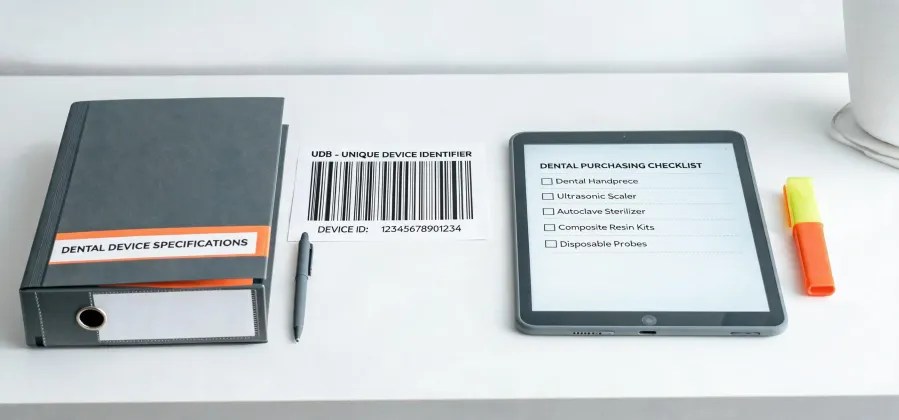
In my role coordinating equipment logistics for dental and surgical centers, I’ve handled roughly 200+ rush orders over the last four years. But one call, coming in at 4:47 PM on a Thursday in March 2024, still stands out. It wasn't about a fancy surgical robot or a high-end clinical chemistry analyzer. It was a dental autoclave—the steam sterilizer that every clinic relies on, every single day.
“Our autoclave just failed,” the practice manager said, her voice tight. “We have a full day of surgeries tomorrow. Impactions, root canals…we can’t reschedule. Can you get us a replacement by 7 AM?” Normal lead time for a new unit: five to seven business days. We had less than 36 hours.
The Initial Triage (Hours 0-6)
My first instinct was to hit the standard vendor list. I called three suppliers. The first offered a unit at $4,200, but delivery was $850 extra and they couldn't confirm until Friday afternoon. The second said they had a floor model for 15% off—$3,570—but the fine print mentioned a $250 “processing fee” and a $125 “priority handling charge.” The third was silent.
This is where my thinking started to shift. I used to just look at the base price. Honestly? That was my rookie mistake. In my first year, I approved a quote that looked like a bargain—$3,800 for a Class B autoclave—only to discover the quote excluded the water treatment system, the trays, and the installation. That “deal” ended up costing us $5,100 and three weeks of back-and-forth.
So, I slowed down. I asked the first two vendors: “What’s not included? What fees do you add after the headline price?” The answers were… telling.
The Breaking Point (Hours 12-24)
By 6 AM Friday, I was stuck. No vendor could guarantee a working, certified autoclave on site by 7 AM. The cost of failure was stark: a day of cancelled surgeries, lost revenue of roughly $12,000 for the clinic, and the safety risk of using cold sterilization as a backup.
That’s when I remembered a small, specialized supplier I’d met at a trade show six months earlier. They didn’t have the cheapest brochures, but their pricing sheet was a single page with one total: $4,450, delivery included, with a 48-hour emergency service guarantee written into the contract. I called them. They had a loaner unit in their own workshop. They could get it to the clinic by 10 AM.
“The vendor who lists all fees upfront—even if the total looks higher—usually costs less in the end.”
The purchase price? $4,450. The rush fee? $0. The outcome? Surgeries started on time. We paid $250 more than the “discount” floor model, but we didn’t pay $1,200 in surprise fees or lose $12,000 in clinic revenue. That’s a 4,800% ROI on the decision to ask tough questions.
The Real Lesson: It’s Not About the Autoclave
This experience fundamentally changed how I evaluate vendors—not just for dental autoclaves, but for everything from surgical catheters to clinical analyzers. It took me about 150 orders to understand that vendor relationships matter more than vendor capabilities. A capable vendor who hides their costs is a liability. A mid-sized vendor who shows you the full cost, including their emergency backup plan, is an asset.
Think about it. When I was evaluating a recent order for a centrifuge, one vendor’s quote said: “Centrifuge: $1,200. Rotor set: $400. Installation and calibration: $350. Total: $1,950.” Another said: “$1,000, but calibration extra.” Which one is cheaper? The first one is actually clear. The second one is a trap.
I can only speak to my experience in managing clinical equipment logistics. If you’re dealing with high-volume, low-price procurement, the calculus might be different. But for any clinic or hospital where equipment failure means a patient gets turned away or a procedure is delayed, this matters.
Putting It in Perspective
Based on industry data, middle-market dental autoclaves range from $3,000 to $6,000 as of January 2025. The standard delivery fee for a bulky item like an autoclave is between $150 and $300, plus $100-$200 for installation and certification. If a quote is $3,500 but “doesn’t include shipping,” your realistic cost is already $3,800.
Our company implemented a “Total Cost Transparency” policy after the 2023 autoclave incident. We now mandate that every emergency request lists three numbers: the base cost, the minimum variance, and the maximum worst-case spend. It’s saved us roughly 15% on hidden fees over the last two years.
Final Takeaway
The next time you’re facing a rush order—whether it’s for an Envista dental chair or a fundus camera—don’t just ask for a price. Ask for the complete, itemized, all-in cost. And if the vendor hesitates? That’s the first red flag.
The key takeaway is simple: transparent pricing isn't just a nice-to-have. It’s the single most critical factor in a true emergency. When time is the enemy, you can't afford surprises. Period.

Elena Varga
Elena Varga is a medical imaging systems analyst covering CT scanners, MRI systems, ultrasound platforms, digital radiography, mammography, and ophthalmic imaging equipment. She references IEC 60601-2-44 for CT safety and essential performance while examining CTDIvol, dose-length product, spatial resolution, slice thickness, field uniformity, throughput, uptime, and DICOM interoperability. Her work helps radiology leaders, medical physicists, biomedical engineers, and procurement teams compare image quality, radiation management, workflow integration, serviceability, and lifecycle cost.