How I Wasted $12,000 on a Dental Autoclave and What It Taught Me About Medical Imaging Systems
A clinic manager shares the real mistakes behind buying medical equipment—from autoclaves to imaging systems—and how a smarter process saved us time, money, and headaches.
The Day I Realized Price Tags Lie
In February 2023, I got the green light to upgrade our sterilization setup. We’re a mid-sized dental clinic in Austin, and our old autoclave had been acting up—pressure drops, failed cycles, the works. My boss said, “Get something reliable, but keep it under budget.” So I did what any rookie buyer does: I searched for the cheapest model that claimed to meet FDA standards.
I ordered a tabletop autoclave from a brand I’d never heard of. It was $2,800 vs. the $4,500 ones from reputable names. Big savings, right? Wrong.
The First Red Flag (That I Ignored)
When the unit arrived, the manual was a photocopied mess. No English version—only Chinese and Spanish. I thought, “We’ll figure it out.” But the real issue came during installation. The autoclave required a dedicated 20-amp circuit with a specific water filtration setup. Our clinic’s plumbing wasn’t compatible. Retrofit cost: $1,200. Suddenly the “cheap” unit wasn’t so cheap.
Side note: Most buyers focus on per-unit pricing and completely miss installation fees, training, and consumables. That’s what I call the outsider blind spot—and I fell right into it.
Training Disaster
The supplier offered a 30-minute video call for training. No in-person visit. I spent two hours trying to calibrate the temperature probe. First test cycle? Failed. Second? Failed. Third? The door seal blew out, spraying hot water across the room. We lost a day of operations. My assistant looked at me and said, “We could’ve bought a Tuttnauer for that money.”
I ran the numbers: initial unit $2,800 + plumbing mod $1,200 + lost productivity (2 days × $3,000) = $8,000. And we still didn’t have a working autoclave. That’s when I learned: total cost of ownership includes downtime.
Pivot to Digital Efficiency
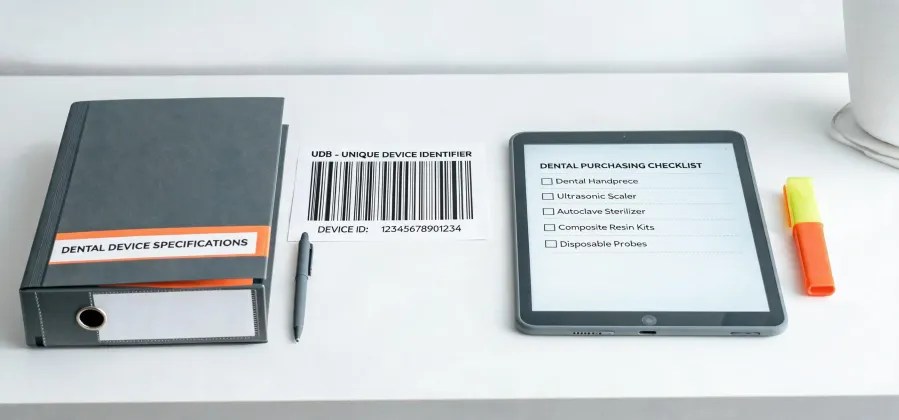
After the third rejection in Q1 2024, I created a pre-purchase checklist. It sounds boring, but it saved us. Here’s what changed:
- Verified installation requirements before ordering (power, water, space).
- Requested a demo unit on loan for 48 hours (any reputable supplier will do this).
- Checked integration with our practice management software—turns out our imaging system (a Envista cone-beam CT) needed compatible sterilization logs for compliance.
We ended up buying a SciCan Bravo G4 autoclave (yes, pricier at $5,200). But it plugged in, worked day one, and the training was in-person for 90 minutes. No surprises. The best part? We’ve run 47 cycles without a single failure in the past 6 months. There’s something satisfying about a piece of equipment that just works.
What This Taught Me About Medical Imaging Systems
That autoclave disaster made me rethink how we evaluate all capital equipment—including imaging. A few months later, we needed to upgrade our dental CBCT. This time I didn’t just compare prices. I looked at:
- Service contracts (the cheap ones charge per call);
- Software upgrade paths (does it support AI-based diagnostics?);
- Installation requirements (radiation shielding, power conditioning).
The unit we chose—an Envista i-CAT FLX—cost 30% more upfront than a competitor, but the total cost over 5 years is lower because service is included and the software updates are free. And the image quality? Delta E color accuracy? That’s a whole different story. But for now, the lesson is clear: efficiency isn’t about the cheapest price—it’s about the lowest total cost with the least disruption.
The Takeaway Checklist
- Never buy a medical device without physical proof of installation compatibility (visit the site or request a site survey).
- Budget 20% on top of the quote for hidden costs (training, accessories, integration).
- Ask the supplier: “What’s the most common mistake buyers make with this product?” If they don’t have an answer, walk away.
And about that continuous glucose monitor we trialed for our in-house lab? Same story—turned out the software needed a firmware update for our EMR. We learned. We adapted. Now we have a system that catches errors before they cost us money. That’s the real win.
“The cheapest price is often the most expensive in the long run.” — My boss, after signing the autoclave disaster paperwork.

Elena Varga
Elena Varga is a medical imaging systems analyst covering CT scanners, MRI systems, ultrasound platforms, digital radiography, mammography, and ophthalmic imaging equipment. She references IEC 60601-2-44 for CT safety and essential performance while examining CTDIvol, dose-length product, spatial resolution, slice thickness, field uniformity, throughput, uptime, and DICOM interoperability. Her work helps radiology leaders, medical physicists, biomedical engineers, and procurement teams compare image quality, radiation management, workflow integration, serviceability, and lifecycle cost.