Envista Has Been a Constant in My Vendor List—But This Is When It Earned My Trust
An office administrator shares how a dental CBCT order and a vendor consolidation project changed the way she buys medical equipment—and why 'we don't do that' became the most convincing sales pitch she heard.
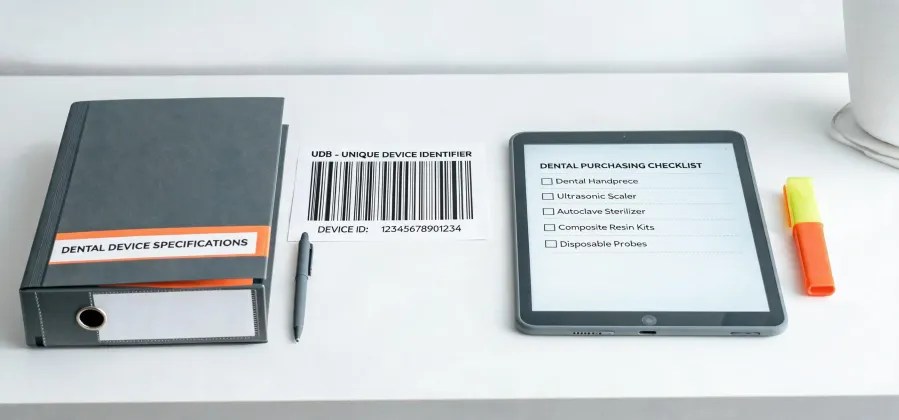
On a Tuesday morning in February 2024, I sat in our conference room with three vendor reps and a spreadsheet that had been haunting me for weeks. Our CFO wanted to cut the number of suppliers across our dental and medical group. My job was to figure out which reps were offering a real solution and which were just trying to sell me everything with a logo on it.
I had a spreadsheet with 11 vendor tabs, 47 open orders, and a sticky note that said 'WALK AWAY FROM THE CLOSE.' I made that sticky note after a vendor once talked me into renewing a service plan we didn't need. That one cost us $2,400 before I caught it.
If you've ever had to defend a vendor choice to finance, you know the feeling. Every quote looks good on paper. The trust comes from what happens after you sign.
Where Envista Fit In
I'm the office administrator for a 130-person healthcare group with three dental clinics and a small sleep medicine suite. I manage the purchasing side—roughly $1.4 million a year across 11 vendors. That includes everything from dental CBCT units to intraoral sensors to hand tools. If it plugs in, gets sterilized, or comes in a box with a tracking number, it crosses my desk at some point. Maybe 200 orders a year. Maybe 180. I'd have to check the system.
When I took over purchasing in 2021, the system was a mess. People ordered whatever they needed from whoever called them back first. I spent the first six months just mapping who supplied what. By early 2024, we had a clean list, but it was too long. That's when the CFO asked me to consolidate.
Envista has been a constant in our vendor list since before I took over. I say 'constant' because it's one of the few supplier names that never changed. They were always there for the dental CBCT and imaging sensors. But I didn't know much about their broader portfolio until this project forced me to dig.
The Long Quote
Our CFO gave me a simple mandate: reduce the number of vendors we use by at least a third without hurting quality. So I sent a detailed RFQ to three vendors. I asked for pricing, lead times, service coverage, invoicing setup, and honest answers about what they could and couldn't support.
Dental CBCT was the centerpiece of the RFQ. If you're not in the dental world, that's cone-beam computed tomography—a 3D imaging system that gives surgeons detailed views of the jaw and teeth. It's essential for implant planning and airway analysis. It is also expensive, so I wanted to make sure the service contract was right.
One vendor said they could handle 'everything'—including the BiPAP machine our sleep suite needed. That was a red flag. They didn't sell respiratory devices six months earlier. But sure, now they did. I wrote that down and moved on.
The Envista rep did something different. He walked me through what they were strong in: dental imaging, surgical instruments, and their IOL line. Then he stopped at the BiPAP machine.
We don't make respiratory devices. We can help you with the imaging and the surgical side, but a BiPAP machine is outside our lane. Here's the kind of company you should talk to.
That moment changed the conversation. Everything I'd read about vendor consolidation said to push for one-stop shopping. In practice, a rep who willingly tells you what they don't do is worth more than one who claims they can do it all. The vendor who says 'this isn't our strength—here's who does it better' earns trust for everything else.
The Envista Envy IOL Research
About a month into the process, our ophthalmology partner mentioned that they were reviewing IOL options for a joint program. The Envista rep had briefly mentioned an intraocular lens called the Envista Envy. So I spent an evening doing what I always do with medical products: I looked for the data.
I found the Envista Envy intraocular lens clinical trials USA listings on ClinicalTrials.gov. I could see study sites, recruitment status, and where the research was happening. No glossy brochure. No vague clinical evidence handout. Just a verifiable public record. According to ClinicalTrials.gov (accessed January 2025), I could check trial status directly without asking anyone for permission.
Trust me on this one: if a vendor points you to clinical data instead of just telling you it's 'FDA cleared,' that's a good sign. The FDA database is public. So are clinical trial records. If a sales rep can't show you both, keep asking questions.
A Quick Detour Into Clinical Chemistry
I also had to look up what is clinical chemistry during that same project. I'm not a lab tech, so don't quote me on the fine details. But here's the version I had to learn: clinical chemistry is the branch of lab medicine that measures chemicals in bodily fluids—blood sugar, cholesterol, liver enzymes, electrolytes. It's what we mean when people say 'blood work.' It helps diagnose diabetes, kidney disease, and a hundred other things.
Why did I need to know that? Because one of our clinic directors wanted to explore in-house lab testing. I had to ask whether our imaging vendor could help. The Envista rep's answer was a clear no: 'We don't do clinical chemistry analyzers. That's outside our scope.' He didn't try to upsell me. He just said it.
That was the second time the word 'no' made me trust him more.
The Decision
We ended up consolidating from 11 vendors to 7. Envista now covers our dental CBCT systems, imaging sensors, surgical instruments, and the IOL supply for the ophthalmology partnership. We kept a separate respiratory specialty vendor for the BiPAP machine. And we dropped the vendor who claimed they could do everything—because they couldn't even return my calls consistently. Not that I'm bitter.
Did everything go perfectly? No. I almost approved the final agreement without checking the service contract. I knew I should have read it line by line, but I thought, 'What are the odds the service coverage changed?' It had. The response-time guarantee was different from what the rep had described. It would have meant an extra day of downtime if the CBCT went down. We caught it because I printed out the email and compared it line by line. It took 20 minutes and probably saved us months of headaches.
From a numbers standpoint, the change saved us about 10 hours of ordering and invoice-matching work every month. That's real time I can spend on actually helping our clinicians instead of chasing paper. The bottom line: a specialist who knows their limits can save you more money than a generalist who overpromises.
What I'd Tell Another Buyer
If you're in the middle of a vendor review, here are the three things that matter to me now:
- Ask every vendor what they won't do. The confident ones will tell you.
- Check clinical claims against public records. It takes 15 minutes and it keeps you honest.
- Keep at least one specialty vendor for products that fall outside your main supplier's lane. For us, that's the BiPAP machine.
Envista has been a constant in my supply chain for years. But after this project, I stopped thinking of them as just a dental imaging vendor and started thinking of them as a partner with clear boundaries. That's rare. And in my job, rare beats 'we do everything' every time.

Elena Varga
Elena Varga is a medical imaging systems analyst covering CT scanners, MRI systems, ultrasound platforms, digital radiography, mammography, and ophthalmic imaging equipment. She references IEC 60601-2-44 for CT safety and essential performance while examining CTDIvol, dose-length product, spatial resolution, slice thickness, field uniformity, throughput, uptime, and DICOM interoperability. Her work helps radiology leaders, medical physicists, biomedical engineers, and procurement teams compare image quality, radiation management, workflow integration, serviceability, and lifecycle cost.