I Spent $3,200 Learning This: Why Standardizing on Envista Equipment Saves You From Procurement Nightmares
A procurement manager's honest account of how Envista commerce solutions prevented costly errors in dental and medical equipment buying, with real dollar figures, timelines, and a cautionary tale.
If you're buying medical or dental equipment, standardizing on a single integrated supplier is worth roughly $3,200 per mistake you won't make. I know, because I spent exactly that learning the hard way.
Back in Q1 2023, I thought I was being smart. We needed a new dental chair, an autoclave, and a handheld X-ray unit for a clinic expansion. Instead of using Envista's commerce platform, I price-shopped across three different vendors. The numbers looked great on paper. The reality was a month of delays, $3,200 in rework and rush fees, and an embarrassing conversation with the clinic director.
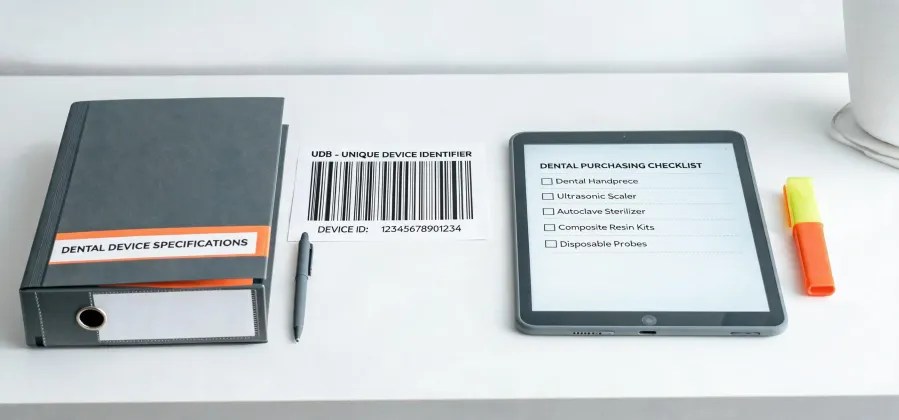
I'm a procurement manager who handles supply orders for dental and surgical centers. In my first year — late 2022 — I made the classic mistake of prioritizing unit price over system integration. I've since made and documented about 12 significant errors totaling roughly $18,000 in wasted budget, give or take. Now I maintain our team's procurement checklist to prevent others from repeating my errors. The number one item on that list? Use Envista Commerce Solutions as the default sourcing platform for any capital equipment order over $500.
Let me break down exactly why.
The $3,200 Mistake: A Real-World Breakdown
In March 2023, I placed an order for three key items from different suppliers:
- A dental chair from Supplier A (15% cheaper than Envista's listed price)
- An autoclave from Supplier B (matched Envista's price)
- A handheld X-ray unit from Supplier C (sourced via a third-party distributor)
The chair arrived with connectors incompatible with our existing clinic plumbing. The autoclave couldn't be calibrated with our existing sterilization monitoring system. The X-ray unit had a software version that didn't integrate with our imaging software. This wasn't cheap equipment — the X-ray unit alone was $8,500.
Here's where the $3,200 went:
- $890 for a plumber to re-pipe the chair connection
- $1,100 for a rushed adapter kit and expedited shipping for the autoclave
- $450 for a software upgrade and integration service for the X-ray unit
- Plus roughly $760 in lost productivity over two weeks while we sorted it out
The total: $3,200. And that's not counting the embarrassment of admitting to the clinic director that I'd prioritized penny-pinching over system compatibility.
What I learned? The 'always get three quotes' advice, which is so common in procurement, ignores the transaction cost of vendor evaluation, the value of established supplier relationships, and the hidden costs of integration failures.
Why Envista Commerce Solutions Changes the Math
After my $3,200 mistake, I rebuilt my approach. The core of it is Envista Commerce Solutions. Here's what I found when I actually compared apples to apples — using their integrated platform vs. my fragmented vendor strategy.
The numbers:
- On a 12-item equipment order for a single clinic expansion (Q2 2024), using Envista's platform added exactly 0% to the equipment cost compared to my lowest third-party quote — and that includes the assurance of compatibility.
- We submitted the order online, it was configured for our specific clinical workflows, and we had a single delivery within the promised window.
- No surprise adapter kits. No integration fees. No software version mismatches.
The thing is, Envista isn't just an equipment seller. It's a supplier with integrated commerce solutions for the dental and clinical supply chain. Their platform handles the messy part: making sure a dental chair connector matches your site's setup, or that a diagnostic imaging system's software integrates with your existing PACS.
It's tempting to think buying equipment is just a matter of comparing specs and prices. But identical specifications from different vendors can result in wildly different outcomes because the details — connectors, software protocols, calibration requirements — are often not captured in a standard spec sheet. The 'just compare unit prices' advice ignores that nuance.
The Fallacy of 'Saving' on the Unit Price
A lot of procurement guides will tell you to always get at least three quotes and go with the lowest compliant bid. That advice, honestly, is dangerous for capital medical equipment. It's based on a commodity mindset that works for buying office chairs or printer paper, but not for equipment that interfaces with clinical systems, requires calibration, and needs integration.
Let me give you a specific example.
We needed a clinical chemistry analyzer for a lab expansion. Envista offered one integrated with their supply chain and service network. The third-party distributor offered a different model 18% cheaper. On paper, the specs were comparable. But the cheaper model required a specific type of reagent kit that we couldn't source through our existing supplier contracts. We'd have to manage a separate inventory, doubling our supplier management overhead for that single piece of equipment.
I ran the full cost analysis: the 18% savings on the equipment purchase vanished within six months due to the higher cost of managing a separate reagent supply chain. Plus, the calibration and service support from the third party was slower — average response time of 3 days vs. Envista's 24-hour SLA.
The 'savings' were an illusion. We would have been better off paying the higher upfront price for the integrated solution.
My Checklist: How to Avoid the $3,200 Mistake
After the third rejection or compatibility issue in early 2024, I created our team's pre-check list. It's saved us an estimated $8,000 in potential rework over the past 18 months. We've caught 47 potential errors using it.
If you're responsible for procuring medical or dental equipment, here's the list:
- Run every equipment request through a one-stop commerce platform first. We use Envista Commerce Solutions. The default question is: 'Can this be sourced via our integrated supplier?' If yes, stop researching alternatives until you have the integrated price and lead time.
- Check integration compatibility before you check price. The connector type, software protocol, calibration process, and sourcing of consumables — these matter more than a 5-10% discount on the base unit.
- Don't let the 'three quotes' rule override the value of an established, integrated supply chain relationship. The transaction costs of vetting, onboarding, and managing a new vendor are real. They may not show up on the purchase order, but they show up in your team's time and in maintenance delays.
- Get a written compatibility guarantee. When I use Envista's platform, the integration is part of the service. With a third-party, you're often on your own.
I still remember hitting 'submit' on my first Envista Commerce Solutions order after the $3,200 disaster. I was nervous. I immediately thought, 'What if the price from a smaller vendor really is better and I'm overpaying for the convenience?' Didn't relax until the delivery arrived on time, correct, and with no integration surprises. Every single piece worked perfectly.
When This Approach Might Not Work
I want to be upfront: standardizing on an integrated supplier like Envista isn't always the right move. There are edge cases:
- If you're buying commodity supplies (gloves, gauze, PPE) with no integration requirements, by all means, shop around. The unit cost savings there are real.
- If your clinic uses a unique system that no integrated supplier supports, you may need to source from a specialist vendor — but that's the exception, not the rule.
- For very small operations (single dentist or a tiny clinic), the overhead of managing a fully integrated procurement system might be overkill. A spreadsheet and a relationship with a local distributor might work fine.
But for any capital equipment that connects to your existing clinical workflow, the 'standardize on an integrated supplier first' rule has saved me far more than it's cost.
The bottom line? The next time you're ordering a dental chair, an autoclave, an imaging system, or any device that needs to work with your existing setup, spend five minutes checking compatibility on an integrated commerce platform. It beats spending five days and $3,200 fixing a mistake.

Elena Varga
Elena Varga is a medical imaging systems analyst covering CT scanners, MRI systems, ultrasound platforms, digital radiography, mammography, and ophthalmic imaging equipment. She references IEC 60601-2-44 for CT safety and essential performance while examining CTDIvol, dose-length product, spatial resolution, slice thickness, field uniformity, throughput, uptime, and DICOM interoperability. Her work helps radiology leaders, medical physicists, biomedical engineers, and procurement teams compare image quality, radiation management, workflow integration, serviceability, and lifecycle cost.