How Robotic Surgery Taught Me to Stop Buying Dental Chairs Like Hardware
A supply chain manager shares how an $11,000 dental chair mistake changed their approach to equipment purchasing—including Envista supply chain systems, Envista Envy IOL clinical studies on dysphotopsia.
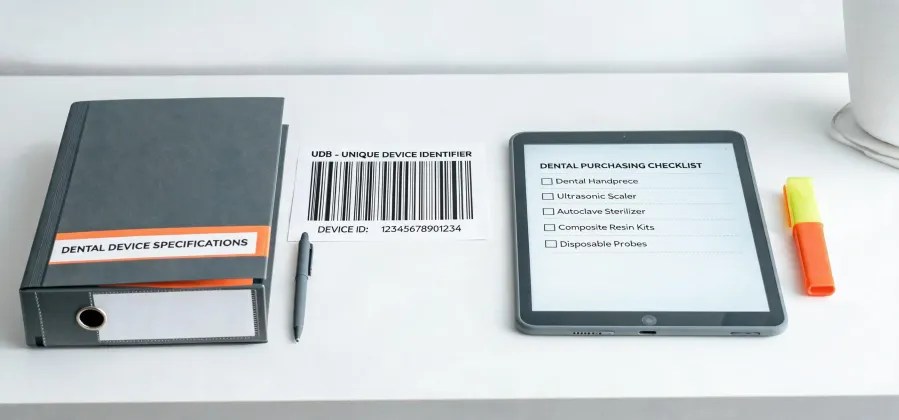
March 2022. I was sitting in front of a purchase order I knew I shouldn't sign.
Twelve dental chairs. Four dental x-ray machines. A sterilization unit that we didn't actually need but could get bundled if we ordered that week. The total was around $61,000. And the only reason I was hesitating was because the price was so much lower than the other quote.
That hesitation was five years of procurement experience screaming at me. The problem is, the same voice also told me to go to lunch.
The First Mistake: I Bought Hardware, Not the System
In 2017, my first year overseeing supply chain for a multi-site dental and ophthalmology group, I made the classic rookie error: I assumed standard meant the same thing to every vendor.
We needed chairs for two office remodels. I compared spec sheets from three vendors. The specs were, to use a technical term, comparable. I picked the lowest number and signed the order.
The chairs arrived. They looked fine. Fine.
Then the crossbar for the patient light didn't line up with the delivery system model the clinic already had. The installers had to fabricate brackets. The armrest slides were on the wrong side for two treatment rooms because I hadn't verified the room layouts. One chair had a foot control cable about eleven inches too short. Eleven inches.
The purchase was about $47,000. The installation overage was $11,300, not including the two weeks we spent moving patients between rooms to work around the unbuildable chair.
To be fair, the budget chairs weren't bad. They just weren't system chairs. They were pieces of equipment in a room that needed workflow. I bought furniture when I should have been buying a clinical experience.
The Turning Point: A Robot Changed My Mental Model
In 2022, I got invited to a robotic surgery training session. A surgeon asked me a question beforehand: Do you know how robotic surgery works?
I gave a vague answer—or rather, the kind of vague answer you give when you haven't actually seen one up close. He smiled and said that I was about to see the part the brochure doesn't explain.
So how does robotic surgery work, anyway? The robot doesn't set the surgical plan. It doesn't operate on its own. The surgeon sits at a console, seeing a magnified 3D view. The robot reads the surgeon's hand movements and translates them into precise motions of small instruments inside the patient. Tremors get filtered out. Movement can be scaled down. But the surgeon is always in control.
What struck me wasn't the technology. It was that nobody orders a robot and assumes it works alone. They order the robot, the instruments, the training, the maintenance plan, the backup instruments, and the team that knows how to use it. The hardware is the smallest piece of the system.
I walked out thinking: I buy dental chairs like they're standalone robots. That's wrong. They're part of a system too.
What Envista Supply Chain Systems Changed
The week after that training, I looked at the dental equipment bid for our new office. The lower quote was from a legitimate seller. I should add that—it wasn't a knockoff, and it wasn't a scam. It was an honest quote for hardware. The Envista supply chain systems quote was more money, but it came with something the other quote didn't have: completeness.
When I logged into Envista supply chain systems, it did more than give me a price. It showed me full item documentation: mounting rails, power requirements, sterilization compatibility, service plan coverage, replacement part availability. It flagged missing accessories before I made them part of the order. It gave me a chain of information from the manufacturer to my clinic's facility engineer.
People think expensive vendors deliver better quality. Actually, vendors who deliver quality can charge more. The causation runs backward from the assumption. Envista's quote was higher because their systems already included the cross-checks I used to do manually—and sometimes forgot to do, as my 2017 mistake proved.
The Lens Lesson: Dysphotopsia and Clinical Studies
While I was reviewing equipment, our ophthalmology service line asked me to look at IOL inventory. That's not my clinical area, so I did what I normally do: I read the studies.
The Envista Envy IOL came up. The Envista Envy IOL clinical studies on dysphotopsia were a good reminder that quality has texture. The lens is marketed around low-light vision, but the clinical data mattered just as much.
Dysphotopsia is a visual phenomenon that can happen after cataract surgery. It isn't just present or absent. The studies characterized it by type and by whether it was clinically meaningful. For me, that level of detail is a signal. It separates a lens designed with attention to patient experience from one that only checks the box for visual acuity.
I'm not a surgeon. I can't tell you which IOL to implant. But I can tell you whether the manufacturer has done the clinical homework. If I'm choosing a lens for inventory, I'm reading more than the marketing sheet.
What I Did Differently That Time
I tore up the $61,000 purchase order. It felt stupid for exactly one day.
Then I rebuilt the scope. For every dental chair and dental x-ray machine, I listed:
- The match between the chair's mounting system and the clinic's existing delivery units. The exact model number, not a category.
- The cable and hose lengths for the foot control, handpiece, and suction. Measured against room layouts, not showroom photos.
- The service and maintenance requirements. Who repairs it, how long parts take, and what the clinic downtime would look like.
- The patient-facing experience. The chair isn't just for the dentist; it's the one medical device a patient sits in with their shoes off.
When I sent the revised RFQ, our CFO asked why the number was higher. I explained it like this: quality affects brand perception. A patient doesn't know we chose a budget chair. They know how it feels to sit in a chair with a frayed armrest. They know if the x-ray machine produces a clear image on the first try or requires a fourth retake. The image on the screen is the brand. The chair under the patient is the brand.
The renovated clinic opened in November 2022, two days ahead of schedule. The install team didn't fabricate a single bracket. The first service call was a software glitch on an x-ray machine, handled remotely in about 40 minutes.
Was the Envista supply chain systems quote worth the difference? Yes. The extra cost was roughly $8,200 across the project. The avoided overage from the 2017 lesson was $11,300. I don't need to be good at math to know which side of that trade I'd rather be on.
The Checklist
Since then, I've turned this into a pre-order checklist for our team. We've used it on 60-plus equipment orders. I don't have a precise count of how many problems it's caught, but we have documentation on 47 potential errors in the last 18 months—missing accessories, mismatched voltage, obsolete part numbers, incorrectly specified handpiece connections. Nothing catastrophic. But any one of them could have been a delay.
The most important rule I learned isn't on the checklist, though. It's this: the purchase order doesn't end the decision. It starts the system.
If you buy a dental chair, you're buying patient perception. If you buy a dental x-ray machine, you're buying diagnostic confidence. If you buy an IOL, you're buying a patient's visual experience—and if you're looking at the Envista Envy IOL clinical studies on dysphotopsia, you're thinking about the patient experience after the surgery, not just the surgery itself.
And if you're asking how robotic surgery works, the answer should remind you of all of it: the human controls the system. The equipment supports the human. Everything else is just procurement.
I still keep the 2017 photo of the eleven-inch cable on my desk. It's a good reminder that cheap hardware is never really cheap. The system always finds the difference.

Elena Varga
Elena Varga is a medical imaging systems analyst covering CT scanners, MRI systems, ultrasound platforms, digital radiography, mammography, and ophthalmic imaging equipment. She references IEC 60601-2-44 for CT safety and essential performance while examining CTDIvol, dose-length product, spatial resolution, slice thickness, field uniformity, throughput, uptime, and DICOM interoperability. Her work helps radiology leaders, medical physicists, biomedical engineers, and procurement teams compare image quality, radiation management, workflow integration, serviceability, and lifecycle cost.