The 7-Step Checklist I Run Before Buying Any Medical Device (After a $3,200 Lesson)
An office administrator for a three-location outpatient surgery network shares the exact vendor vetting process she uses before ordering mechanical ventilators, portable ultrasounds, or lab equipment—including how she verifies manufacturer contacts and why she now pays extra for delivery certainty.
-
Why I Built This Checklist
-
The 7-Step Supplier Vetting Checklist
-
Step 1: Get the manufacturer's official contact information—from the manufacturer
-
Step 2: Confirm the device class and what you're actually ordering
-
Step 3: For lab equipment, learn the principle—not just the spec
-
Step 4: Get delivery certainty in writing—and pay for it if you have to
-
Step 5: Verify service and warranty coverage in your region
-
Step 6: Check the invoicing and compliance setup before the first order
-
Step 7: Line up a backup supplier before you need one
-
Step 1: Get the manufacturer's official contact information—from the manufacturer
-
Common Mistakes I Still See
-
What This Checklist Won't Do
Why I Built This Checklist
I'm the office administrator for a three-location outpatient surgery network with 350 staff. I manage all clinical equipment and supply ordering—roughly $190,000 annually across 11 vendors. I report to both our clinical operations director and our finance manager, which means I hear about it from both sides when something goes wrong.
In March 2023, I had a mechanical ventilator arrive nine days late. We had a patient on the schedule who needed it. I ended up paying $3,200 for a rental unit, and I had to explain to our medical director why my "confirmed" delivery date meant nothing.
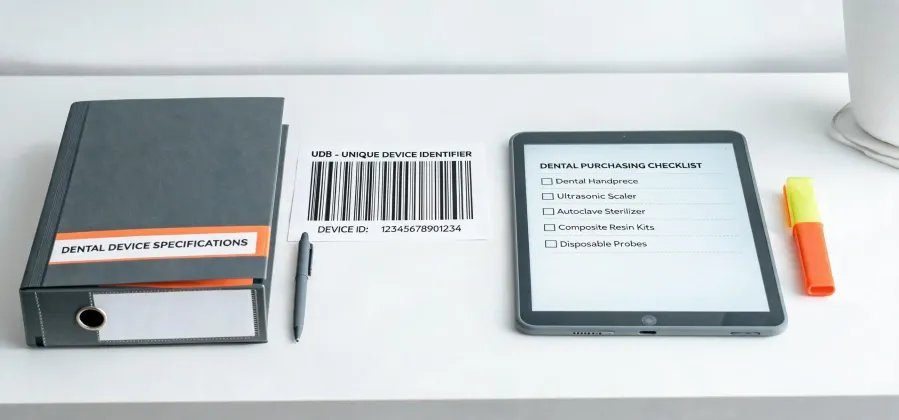
That was the last time I trusted a verbal timeline. Since then, I've built a seven-step checklist I run before I place any order over $5,000. It takes about 45 minutes per order. It's saved me twice already.
The 7-Step Supplier Vetting Checklist
Step 1: Get the manufacturer's official contact information—from the manufacturer
For any device from a major manufacturer—Smiths Medical, for example—I start at their corporate site, not at whatever search result shows up first. Go to their contact page. Find the office nearest you. For us, that's the Smiths Medical Plymouth, MN location, since we're in the upper Midwest.
Write down the phone number—the one listed on their official site, not the one on the quote. Then cross-check it. I should add why this matters: in 2023, I got a quote from what turned out to be a third-party reseller using a manufacturer's name in their marketing. The phone number on the quote routed to a voicemail box that hadn't been checked in weeks. The number listed on the manufacturer's own contact page got me to a live person in under three minutes.
The 45 seconds it takes to verify a phone number is worth it.
Step 2: Confirm the device class and what you're actually ordering
A mechanical ventilator is not a "ventilator accessory." A portable ultrasound is not "imaging equipment—general." These distinctions matter for procurement codes, and they matter for regulatory reasons.
Per FTC guidelines (ftc.gov), advertising claims for medical devices must be truthful, not misleading, and substantiated with evidence. If a listing says "clinically proven," ask for the study reference. If it says "FDA cleared," ask for the 510(k) number. A legitimate manufacturer will have both.
This step takes five minutes. The vendors who hem and haw are telling you something.
Step 3: For lab equipment, learn the principle—not just the spec
We recently bought gel electrophoresis equipment for our pathology lab. I had no idea what it was. Here's the short version: gel electrophoresis is a lab method that uses an electric field to separate DNA, RNA, or proteins by size. The molecules move through a gel matrix—smaller ones move faster. That's the principle. It's used in molecular biology labs for DNA fingerprinting, PCR analysis, and protein research.
Why does this matter to a buyer? Because the consumables are where the ongoing cost lives. The unit itself was $2,400. The annual spend on gels, buffers, and power supply replacement is closer to $7,000.
I didn't know to ask about consumable pricing on my first lab equipment order. I do now.
Step 4: Get delivery certainty in writing—and pay for it if you have to
This is the step I get the most pushback on from finance. I'll say it plainly: in situations where a delay has real operational consequences, delivery certainty is worth paying for.
In our 2024 vendor consolidation, every spreadsheet analysis pointed to the cheaper distributor. 12% lower unit cost on a portable ultrasound. My gut said no. I went with the higher-priced option that offered a guaranteed delivery window with a penalty clause.
The cheaper option missed two delivery dates in the first quarter. Our higher-priced option delivered on time both times. The 12% I "overpaid" was about $1,800. The penalty we would have owed our surgical scheduling team for a delayed setup was $6,000.
I'm not saying always pay more. I'm saying: when the deadline is real, price the uncertainty, not just the unit.
Step 5: Verify service and warranty coverage in your region
Ask for the name of the service technician who would actually come to your site. Not the regional sales manager—the technician. If they can't give you a name, that's a red flag.
We had a vendor once who promised "24-hour service response." When I asked where the nearest technician was based, the answer was four hours away. That's not 24-hour response in any meaningful sense.
Step 6: Check the invoicing and compliance setup before the first order
A vendor who can't provide a proper invoice with a tax ID and PO reference will cost you hours in finance reconciliation. I learned this the hard way in 2023: I accepted a handwritten receipt from a new vendor because the price was good. Finance rejected the expense report. I ate $2,400 out of my department budget.
Now I ask for a sample invoice before I place any order over $1,000.
Step 7: Line up a backup supplier before you need one
This is the step most people skip. It's also the one that saved us in January 2025, when our primary ventilator supplier had a shipping delay. We had a backup already vetted. The order went out the same day.
You don't need a full second relationship. You need a phone number, a quote on file, and a conversation that establishes you as a potential customer.
Common Mistakes I Still See
- Comparing only on unit price. The cheapest unit often has the most expensive consumables or the slowest service response.
- Relying on a single distributor for a whole category. If they have a bad quarter, you have a bad quarter.
- Not asking about consumables. For lab equipment especially, the box is the cheap part.
- Accepting a verbal delivery date. Get it in writing, with a penalty clause if the order matters.
What This Checklist Won't Do
It won't tell you which device is clinically better—that's a question for your medical director. It won't get you the lowest possible price. And it won't eliminate the possibility of a bad order.
What it will do is make sure you know who you're buying from, what you're actually getting, and when it's supposed to arrive. In my experience, that's most of the battle.
Looking back, I should have started this checklist after the first late delivery, not the third. But given what I knew then—nothing about how unreliable "confirmed" could be—I guess I had to learn it the expensive way.

Elena Varga
Elena Varga is a medical imaging systems analyst covering CT scanners, MRI systems, ultrasound platforms, digital radiography, mammography, and ophthalmic imaging equipment. She references IEC 60601-2-44 for CT safety and essential performance while examining CTDIvol, dose-length product, spatial resolution, slice thickness, field uniformity, throughput, uptime, and DICOM interoperability. Her work helps radiology leaders, medical physicists, biomedical engineers, and procurement teams compare image quality, radiation management, workflow integration, serviceability, and lifecycle cost.