The $3,200 'Standard Setup' Mistake That Changed How I Order Medical Equipment
Eight years into medical equipment procurement, I thought I knew what 'standard' meant. Then forty wrong infusion sets, a drifting hematology analyzer, and two delayed stent cases taught me otherwise. Here's the checklist that's caught 47 problems since.
-
It Started With a Three-Word Email
-
The Quote Came Back. I Approved It. That Was Mistake Number One.
-
Mistake Number Two: The 'Bargain' Hematology Analyzer
-
Mistake Number Three: 'How Is a Stent Placed?' Should've Been My First Question.
-
Mistake Number Four: The Electronic Pipette Calibration Problem
-
The Fix: A One-Page Checklist That's Caught 47 Problems Since
-
What I'd Tell Someone Starting Today
It Started With a Three-Word Email
March 2023. I'd been handling equipment procurement for our 120-bed community hospital for eight years at that point—long enough to feel confident, short enough to still make expensive mistakes.
The email from our nursing director was short: "Need ICU upgrade quote. Standard setup."
Three words. "Standard setup." I sent them straight to the smiths-medical rep I'd been working with, along with a few other vendors. In my head, "standard ICU setup" meant six syringe pumps, a batch of infusion sets, and whatever else the floor nurses had been asking for. I attached our old inventory sheet and wrote: "Same as before, but new."
Here's the thing about "same as before"—our "before" was from 2017. Different pumps, different interfaces, different everything. I should've checked. I didn't.
The Quote Came Back. I Approved It. That Was Mistake Number One.
The quote covered six smiths medical syringe pumps (the Medfusion 4000 series), forty smiths medical cleo 90 infusion sets, and a few accessories. Total: $9,400. Reasonable. I forwarded it to the director, she signed off, and I processed the PO on April 6.
Two weeks later, the shipment arrived. We unboxed everything. The pumps looked great—compact, clear display, the usual build quality. Then our lead ICU nurse, Danielle, picked up one of the Cleo 90 sets and frowned.
"These don't fit the new pumps," she said. "The connector's different. We'll need adapters."
I stared at the box. Then at the pump. Then at the connector. She was right. The pumps used a proprietary line, and the Cleo 90 sets—while perfectly good infusion sets—weren't compatible out of the box. We needed a specific adapter, and nobody had mentioned it because I hadn't asked.
I said "standard setup." The rep heard "pumps and sets." We were using the same words but meaning different things. Discovered this when forty sets sat useless on our supply room shelf.
That error cost $1,020 in adapters plus a two-week wait. Not catastrophic. But it set the tone for the rest of the quarter.
Mistake Number Two: The 'Bargain' Hematology Analyzer
While the pump issue was unfolding, I was also ordering lab equipment. Our lab manager wanted a new hematology analyzer—nothing fancy, just a five-part differential machine for routine CBCs. I found a "reconditioned unit" online for $6,800, roughly 40% less than a new mid-range model. The listing said "fully calibrated" and "certified."
The upside was $3,200 in savings. The risk was a machine that might not hold calibration. I kept asking myself: is $3,200 worth potentially sending CBCs to an outside lab for six months?
I went with the cheap one. Worst case, I figured, we'd send it back.
The analyzer arrived. Our lab tech calibrated it. It ran fine for eight days. On day nine, the WBC counts started drifting—not wildly, but enough that our pathologist flagged three results. We ran controls. Failed. The vendor's "certified" reconditioning apparently didn't include replacing the sample probe, which had a microscopic crack.
That error cost $890 in redo plus a $600 rush fee for a replacement probe, plus two weeks of sending stat CBCs out. Total damage: about $1,500 and a very annoyed lab manager.
(Should mention: the vendor did honor the warranty. The issue wasn't fraud—it was my assumption that "certified" meant "same as new." It didn't.)
Mistake Number Three: 'How Is a Stent Placed?' Should've Been My First Question.
Around the same time, one of our cardiologists pulled me aside. We were expanding our cath lab capabilities—nothing major, but he wanted to start doing more elective stent placements.
"Can you make sure we have the right infusion setup for the stent cases?" he asked.
I nodded like I knew exactly what he meant. I didn't. That night, I Googled how is a stent placed—really, I did, at my kitchen table with a cup of coffee going cold—and read through the actual procedure: guide catheter, balloon angioplasty, the drug-eluting stent crimped onto the balloon, contrast dye injections through a manifold. And suddenly, the infusion pump question made sense. During stent placement, you're injecting contrast, saline flushes, and sometimes vasodilators through a manifold—and the pump needs to handle very low flow rates precisely, without pulsation.
I hadn't asked about low-flow accuracy. I'd just ordered "standard" pumps. Our Medfusion 4000s were good, but the adapter situation meant we couldn't run the Cleo 90 sets with the manifold configuration the cath lab needed. We ended up ordering a different tubing set—$85 each, twelve of them, $1,020—plus a two-week delay waiting for the right connectors.
That error cost $1,020 in adapters plus a two-week delay on the first two stent cases. The cardiologist was polite about it. The OR scheduler wasn't.
Mistake Number Four: The Electronic Pipette Calibration Problem
This one's smaller but still annoying. Our lab manager also ordered two electronic pipettes—single-channel, variable volume, for the chemistry bench. The vendor shipped them with a standard calibration certificate. What I didn't know: the cert was for the factory's reference conditions (68°F, specific humidity), not our lab (72°F, higher humidity, altitude differences).
The pipettes were off by about 0.8% at the low end—within FDA tolerances, technically, but enough to fail our internal QC checks. We paid $400 to have them recalibrated on-site.
Lesson: "Calibrated" doesn't mean "calibrated for your lab." Ask for the actual environmental conditions. It's a five-minute email that saves four hundred bucks.
The Fix: A One-Page Checklist That's Caught 47 Problems Since
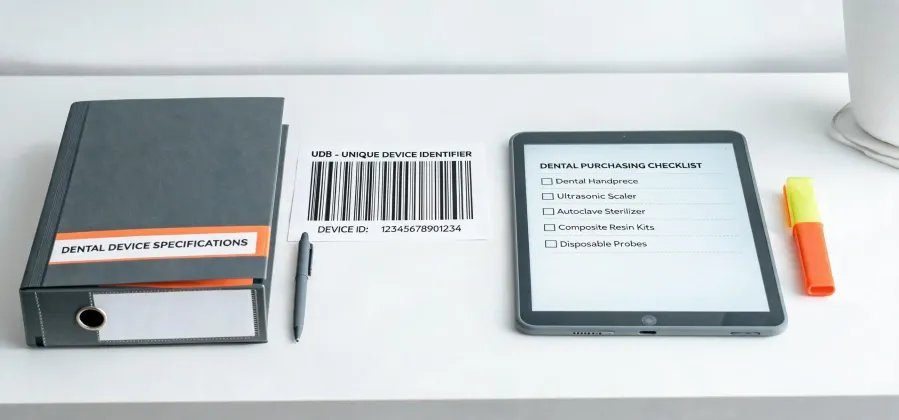
After all this—roughly $3,200 in direct costs and probably another thousand in delays and staff time—I sat down and built a checklist. One page. Fourteen questions. Nothing fancy.
Here's what it covers:
- Compatibility: Will every component connect to every other component? Who confirms this—me, the vendor, or the clinical team?
- Definition of 'standard': What does "standard setup" mean for THIS department, THIS year, with THESE specific pumps and THIS specific tubing?
- Clinical context: What procedure is this equipment for? Have I asked someone who actually performs it?
- Environmental conditions: Does the calibration certificate match our lab's actual conditions?
- Total landed cost: Device price + adapters + calibration + shipping + training + downtime if something fails.
We've caught 47 potential issues using this checklist in the past 18 months. Forty-seven. Most were minor—a missing connector, a wrong power cord spec, a calibration cert that didn't match our incubator temp. But maybe six or seven would've been real problems.
One example: a $200 order for backup infusion sets that would've been the wrong size for our new pumps. Caught it on the checklist. Saved $200.
Small orders deserve the same scrutiny as big ones—maybe more, because a $200 mistake hurts a small department a lot more than a $20,000 one hurts a big hospital. When I was starting out, I thought small orders didn't need "real" attention. I'd rush through the spec sheet, assume the rep knew what I needed, and sign. That's exactly how I ended up with forty wrong infusion sets. Small doesn't mean unimportant—it means potential for a different kind of mistake.
What I'd Tell Someone Starting Today
Look, I'm not going to pretend the issue was bad vendors. The Smiths Medical rep was helpful the whole way through. The reconditioned analyzer vendor honored the warranty. Nobody was trying to screw us over. The problem was me—I assumed that "standard" meant what I thought it meant, and I didn't ask enough questions because I didn't want to look like I didn't know.
Here's the thing: the questions you're embarrassed to ask are usually the ones that save you the most money.
Also—and this is important—small orders get you treated differently. Not by good vendors. A good rep treats a $400 order with the same care as a $40,000 one. But bad processes and rushed purchase orders? Those hurt small orders disproportionately, because there's no budget buffer to absorb the mistake.
So build the checklist. Ask the dumb questions. Confirm the connectors. And for the love of everything, if you're ordering infusion equipment for a new procedure, at least Google "how is a stent placed" before the PO goes out.
I did eventually. It cost me $1,020 and two weeks. You can have it for free.

Mikkel Sorensen
Mikkel Sorensen is a rehabilitation and patient-handling equipment analyst covering power wheelchairs, manual wheelchairs, hospital beds, patient lifts, transfer aids, mobility scooters, prosthetic components, and orthotic systems. He references the ISO 7176 series and IEC 80601-2-52 while assessing static stability, braking, fatigue strength, turning space, safe working load, entrapment zones, battery range, actuator duty, and postural adjustability. His work assists rehabilitation clinicians, care facilities, biomedical teams, and buyers with fit, transfer safety, accessibility, maintenance, durability, and fleet planning.