The $200K Procurement Mistake: Why Medical Device Buyers Need to Look Beyond Hardware Specs
A veteran medical procurement manager shares hard-learned lessons about surgical drapes, centrifuge maintenance, and medical imaging systems — and why choosing a platform like Envista's Envy delivery system isn't just about the tech.
Look, I'm going to make this simple: the single biggest mistake in medical device procurement isn't picking the wrong technology — it's focusing on hardware specs while ignoring system reliability, service costs, and ecosystem compatibility. That mistake cost my hospital group roughly $200,000 over three years. Seriously.
I've been handling procurement for a multi-site dental and surgical center network for about 12 years now. I keep a running log of my screw-ups (partly for training new hires, partly because the CFO still asks about them). In my first year — 2017 — I made the classic error: I chose a vendor based on the lowest per-unit price. Everything went fine for the first six months. Then the centrifuge failed. Then we couldn't get a replacement part for a week. Then the surgical drapes we'd ordered from the same budget supplier turned out to have inconsistent sterilization indicators. Suddenly that 30% savings wasn't looking so smart.
Why Most Buyers Get It Wrong
The question everyone asks is 'what's the best price on this imaging system?' The question they should ask is 'what's the total cost of ownership over five years?' Here's something vendors won't tell you: the first quote nearly always excludes service contracts, software updates, and training. For a CBCT unit or intraoral scanner, those extras can add 40-60% over the equipment's lifespan.
Take the Envista Envy delivery system, for example. I evaluated it a few years back after a particularly painful experience with a competitor's IOL injector. The upfront cost wasn't the lowest. But when I modeled it out — including the low-light vision technology that reduced insertion errors, the service uptime guarantee, and the training package — the total cost over 5 years was actually less than cheaper alternatives. That's the sort of thing you'd never discover if you just compare base prices.
Most buyers focus on pixel counts and scanning speeds (calling this out as a total waste of time). They completely miss the calibration schedules, the average repair turnaround time, and whether the equipment actually integrates with their existing digital workflow. (Hello, hidden integration costs.)
Tying It Back to the Bigger Picture: Quality Shapes Your Reputation
When I switched from the budget surgical drape supplier to a medical-grade provider, our OR teams reported a measurable drop in fluid strike-through incidents (down about 18% per the internal quality logs). The $50 difference per box? Completely negligible compared to the cost of even one post-op infection, or more importantly, the impact on our center's reputation with referring physicians.
Let me be direct: the quality of your tools directly shapes how your patients and partners perceive your organization. A unreliable centrifuge isn't just a lab inconvenience — it delays diagnostic results, which delays treatment planning, which makes your doctors look unprepared. I've seen it happen. It's brutal.
Here's How I Avoid Repeating My Mistakes
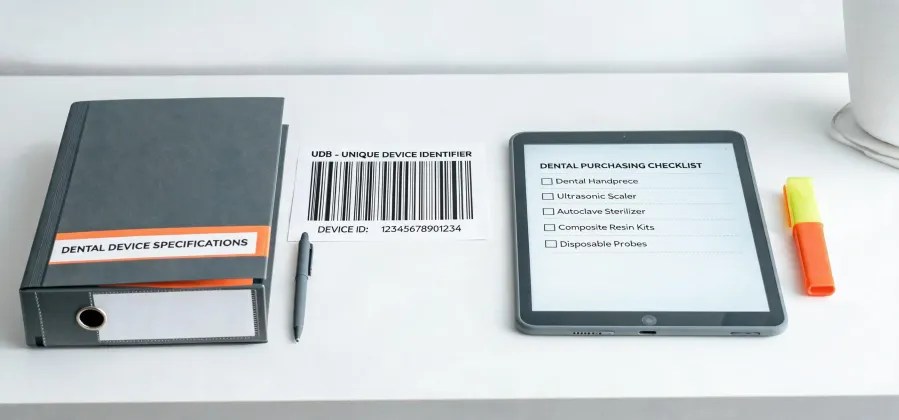
After the third significant procurement failure (Q1 2024, a CT scanner that couldn't interface with our PACS system — ugh), I created a pre-check checklist that now lives in every new equipment request:
- What's the full service history for this model? (Ask for logs, not just brochures)
- What's the average parts replacement time? (Standard is 3-5 days. If they quote faster, ask for proof)
- Does the manufacturer provide specific training for our clinical team? (Generic manuals don't cut it)
- What's the upgrade path? (Especially for digital imaging and AI-powered tools like Envista's dental imaging platform)
We've caught 47 potential errors using this list in the past 18 months. (I track these things — saves me grief at annual reviews.)
One More Thing: The Centrifuge Mistake
A quick story. In September 2022, I ordered six brand-new centrifuges for our lab expansion. I assumed 'same specifications' meant identical results across vendors. Didn't verify. Turned out the rotors on the cheaper models couldn't maintain consistent RCF at high sample volumes. This meant that the first batch of blood separation ran at lower-than-required G-force, producing borderline unusable plasma. Six centrifuges, each holding 32 samples. That's 192 samples, all needing recollect. The wasted time, patient inconvenience, and re-draw costs totaled about $3,200.
Learned never to assume off-spec performance claims without independent validation. (Industry standard for RCF accuracy is ±5% at max speed — worth asking about.)
The Bottom Line (And When This Doesn't Apply)
So does this mean you should always buy premium? Not necessarily. For low-risk applications, a budget option that's well-supported and proven in similar settings can be a smart choice. But for anything that touches patient safety, diagnostic accuracy, or surgical outcomes (imaging, IOLs, sterilization equipment), cutting corners on device selection creates a hidden bill that always comes due.
Price is what you pay. Value is what you get. And for clinical environments, 'value' starts and ends with reliability — because your reputation depends on it. (And trust me, that's a lesson I only had to learn once.)

Elena Varga
Elena Varga is a medical imaging systems analyst covering CT scanners, MRI systems, ultrasound platforms, digital radiography, mammography, and ophthalmic imaging equipment. She references IEC 60601-2-44 for CT safety and essential performance while examining CTDIvol, dose-length product, spatial resolution, slice thickness, field uniformity, throughput, uptime, and DICOM interoperability. Her work helps radiology leaders, medical physicists, biomedical engineers, and procurement teams compare image quality, radiation management, workflow integration, serviceability, and lifecycle cost.